I spent just over 2 weeks in Europe this December, a trip that was much anticipated and much dreaded for different reasons. Here is a selection of photos from the places I visited: Florence, Venice, Marseille, and Paris. Packing light, I did not bring a camera battery charger, so my battery died the first night in Paris. I didn't mind - I have plenty of pictures from previous trips to my favorite big city. Josh, my traveling buddy, had his camera and met up with me in Paris a couple days later, so he has photo documentation of our excursions there.
I flew into Florence (Firenze). The streets are narrow and winding and I was lost the whole time; fortunately Josh had spent the fall semester getting to know the city so I had a personal tour guide. The view from the cupola of the Duomo was incredible. It was the absence of trees in the city that struck me as I looked out over the city and all of its red rooftops. To find trees, we had to pay 10E to enter the Boboli Gardens that are part of a Medici palace (Palazzo Pitti), or go to the outskirts of the city.
I had always associated the Fleur de Lys as a symbol of France, but here it was decorating the Christmas tree outside of the Duomo (I know the church is not technically the Duomo, but I can never remember the full Italian name). The Fleur de Lys is also the symbol of Florence.
There were plenty of places to tie up your horse and secure your torch on the medieval buildings.
When I started taking pictures of pigeons, I knew I was missing my chickens.
Side note - I had a dream while in France that one of my hens had died. She had been declining in health for several months now, and I left the chickens in the good hands of my brother. When I returned to Florida, Demeter was alive but in noticeably worse health. I spent a day with her, made her a warm nest box on the ground for her last night (she couldn't jump into the boxes with the other hens any more), fed her a handful of mealworms in the morning, and stopped the flow of air to her lungs. Demeter died quickly and quietly and I buried her under the bald cypress.
No shame about where your food is coming from.
How different are our "undeveloped" rivers than these European rivers that have been manipulated, channeled, inextricably changed by many hundreds of years of civilization. Were these rivers kin to our natural rivers once, what did they look like before? What will our rivers look like in 500 years?
At the Palazzo Pitti. And below, in the Boboli Gardens. The fate of many a tree. This one had survived many years. Fortunately these gardens exist in Florence, but unfortunately they are not a public park, rather they are part of the Medici palace museum complex. This is where I gained an even greater appreciation for Paris, where the once royal gardens are now public parks for any person to wander about in freely.
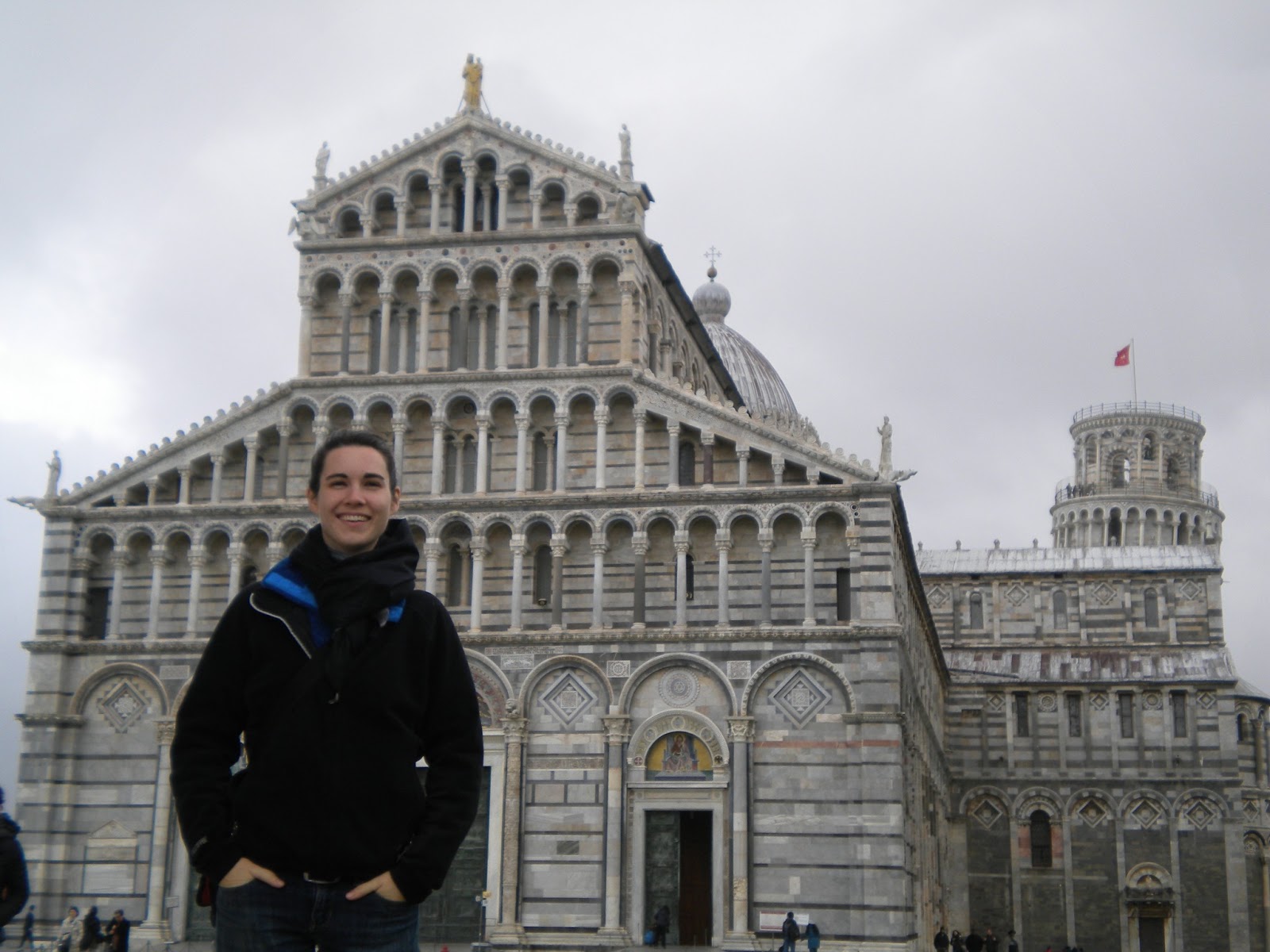
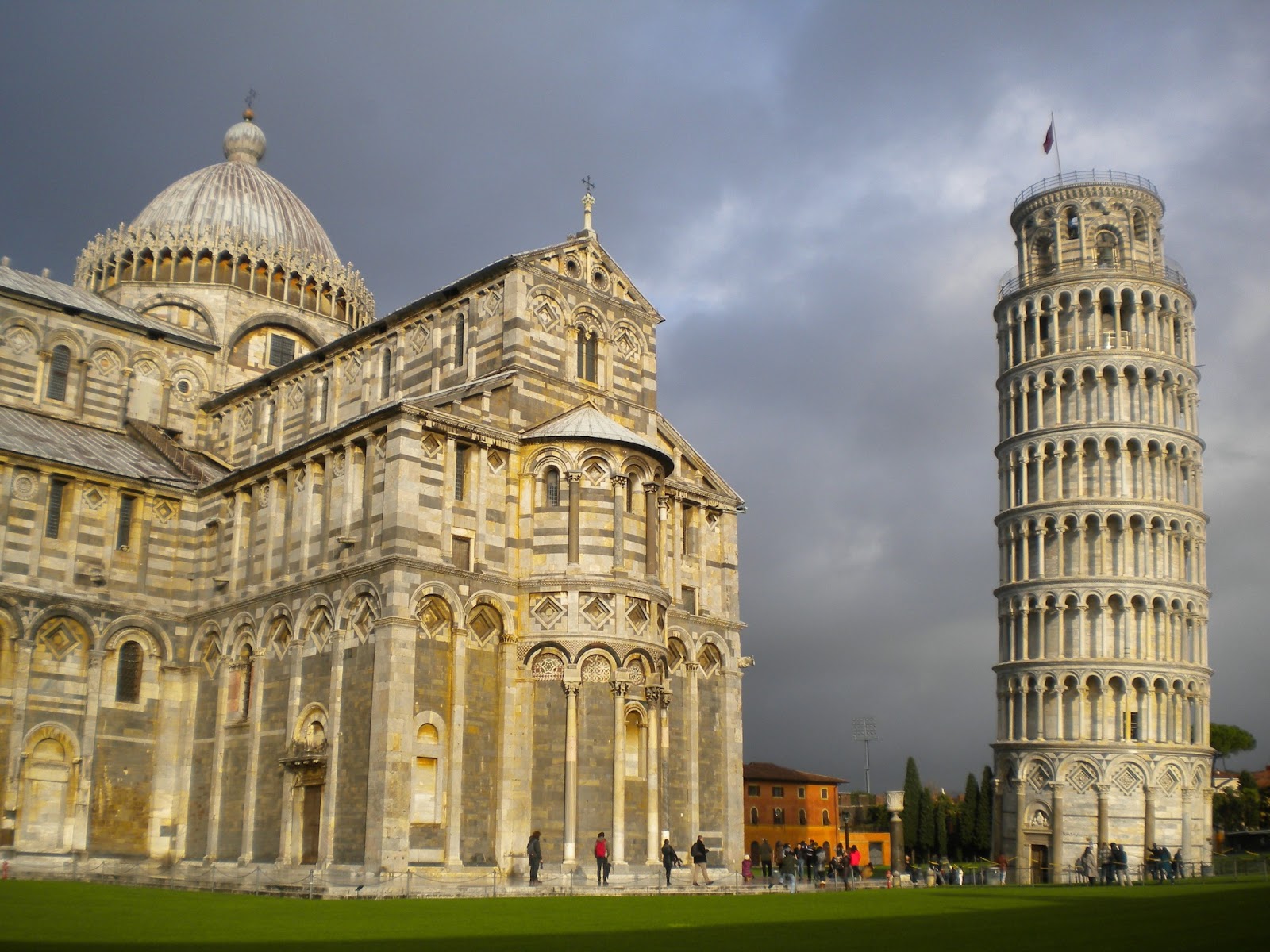
We took a day trip to Pisa. The weather was consistent in Italy - overcast, drizzly, cold.
No one ever told me there was a church attached to the leaning tower. Every picture you see of the tower, it stands along, leaning and looking like at any time it might collapse. But no one explains why there is a random tower that happens to be leaning precariously in a small town in Italy. It's because it's a bell tower, a bell tower for a huge, gorgeous church!
Despite the weather, people were out and about filling the old roman streets, which were all brightly decorated for the season. On our last night in Florence, we found a "secret bakery," where we bought hot-out-of-the-oven croissants and pastries. Most of the bakeries where one stops for breakfast don't actually bake their own pastries, instead they are bought from these "secret bakeries" that are baking away very early in the morning for delivery to the stores. If you go to the door of a secret bakery, tucked down a hidden alley, at 2 or 3 am and knock quietly, someone will answer, take your order, and return with the freshest pastry in exchange for a euro or two.
With limited time and much to see, I decided to see Venice rather than Rome. And I am 100% content with this choice. Venice has to be one of the neatest cities ever.
Just imagining how the city was built is incredible, how people have lived here and continue to live here is other-worldly, and awesome!
The taxis are very fancy (in the foreground above). The buses (vaporetto) are very functional - we used the vaporetto a lot. You can see a vaporetto stop in the background, left side of the Grand Canal, white with yellow striping, and there is a vaporetto even farther in the background.
One of my favorite things about the city (because there were multiple favorite things) was all of the little side canals, or rios (rivers), and the boats that were found on them.
Like this very nice, well-cared for boat.
And this probably once-nice, but now almost-sinking boat. This sums up much of the feel of Venice. Once the wealthiest city in Europe, still showing off grand buildings, but with only the remnants of their once extraordinary facades, now deteriorating.
The gondoliers are still going strong, although with the winter weather I had a feeling that most gondolas were docked and most gondoliers were staying warm drinking a cappuccino at home.
A city that runs on boats must have neighborhood boat stores. This one was right around the corner from our hotel.
A city whose roads are waterways must also have every kind of boat - just as we have a vehicle for every purpose. Like for delivering a piano.
Or for delivering a sick or injured person to the hospital.
Approaching the end of the Grand Canal, the waterway opens up into the sea.
In San Marco square, as the tide rises and the square begins to flood, a gull guards his puddle.
From Venice we took trains through Milan, through Monaco, to Marseille. Another city that has a strong connection with boats and the sea.
Construction obscured what could have been very nice walks along the edges of the old port, but some glimpses of the boats in the port were caught. The old port seemed to be a mixture of pleasure sailing and cruising boats, working fishing vessels, this charter sailing ship, and the ferries that make trips to the Calanques and Frioul Islands.
A view of the Frioul Islands from the Chateau d'If. These islands were once used to quarantine infectious people - plague, yellow fever, leprosy. Now they are part of a marine preserve and it is safe to hike on the trails without contracting devastating diseases.
On the edge of the island d'If.
The stairs leading up to the chateau. Built as a fortress against pirates and other attackers, it was eventually converted into a prison, where Edmond Dantes was imprisoned and made his famous escape.
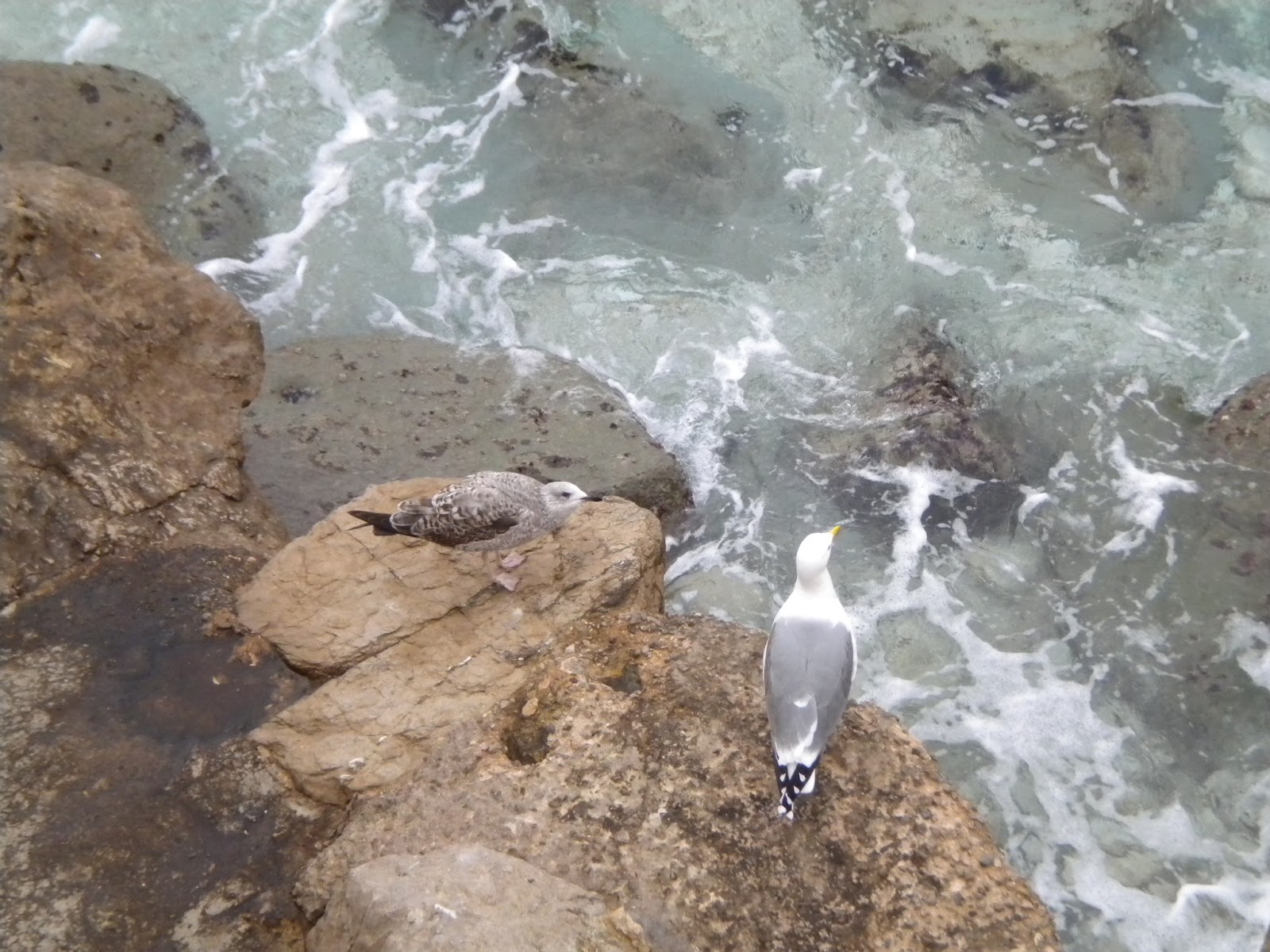
A juvenile gull begs for a handout. The adult promptly flies away.
On the Frioul Islands. There is an extensive network of bunkers built into the rocky outcroppings. There were battles in Marseille during WWII, and although I couldn't find any information about the role of these islands, I assume these bunkers had to do with this war. We found a way into a couple of the bunkers and explored the spooky tunnels and rooms.
Now just a gull keeps a lookout.
Looking back towards Marseille, which was shrouded in smog. I found it to be a typical dirty city, but these islands were redeeming, as was the couscous we had two different nights at Sur le Pouce, a little neighborhood restaurant near the hostel.
The pine trees have trouble getting very tall due to the dry, rocky, seemingly soil-less, and windswept conditions.
A week in Paris ended the trip. This is a view of the flat we rented in the heart of the Latin quarter, in the same building that Ernest Hemingway lived in from 1921-1925, according to the landlord and the plaque on the outside of the building. It was a perfect location.
Perfect except for (and because of) the hopping night life. My first night (Friday), I was awoken at 4:30 am by a bunch of guys chanting and singing and a girl laughing below my window. "Montes, montes, vas-y Helene, vas-y Helene (climb, climb, go Helene, go Helene)". I finally had to get up to see what was going on - a girl was climbing a rope tied to the second floor window bars, the guys on the ground were cheering her on, and a guy inside the window was waiting to grab her arm and help hoist her into the window. Once she was in, the rope was pulled up and the crowd down below dispersed. Just another night in the student quarter of a big city!

Paris was great as always! Went to the Musee d'Orsay, the Eiffel Tower, the Louvre, the Pere Lachaise cemetary, the Luxembourg Gardens, among other things. Did a lot of walking and exploring and puttering around in bookstores on rainy afternoons. Found Le Seigneur des Anneaux (Lord of the Rings trilogy) and a pocket guide to the birds of France (in french).
And by the end of my two weeks in Europe, I was ready to be home in the New World again.